Bitcoin's Year-End Price Outlook Remains Positive Despite Trump Tariffs

With global markets grappling with political uncertainty, Bitcoin’s resilience continues to impress. Former U.S. President Donald Trump’s recent comments about reinstating tariffs on Chinese imports have sparked renewed volatility in traditional finance. But for Bitcoin, the narrative is playing out differently. While equities flinched, BTC remained steady—and even gained ground.
As we approach the final quarter of 2025, many investors are asking: can Bitcoin maintain its momentum despite mounting geopolitical pressures? Surprisingly, analysts remain bullish on Bitcoin’s year-end price outlook, citing a range of macro and on-chain factors supporting its growth. In this article, we’ll explore how Trump’s tariff talk intersects with Bitcoin’s trajectory, and why digital gold might emerge stronger from the storm.
Trump’s Tariff Rhetoric and Global Market Reactions
The Policy Pivot
In early Q4 2025, Donald Trump signaled a return to "America First" trade strategies, vowing to impose 25% tariffs on Chinese tech goods if re-elected. His proposal includes:
Additional taxes on semiconductors, EV batteries, and telecom equipment.
Potential reviews of existing trade deals with China.
Increased scrutiny on U.S. companies operating abroad.
Immediate Market Response
Stock indices dipped: S&P 500 fell 1.8% in a week following the announcement.
The Chinese yuan weakened against the U.S. dollar.
Gold and Bitcoin both gained, indicating a flight to alternative assets.
Historically, tariff announcements lead to fears of inflation and supply chain disruptions. This time, Bitcoin is benefiting from its safe-haven appeal, especially among investors skeptical of fiat-driven policy swings.
Why Bitcoin Remains Resilient
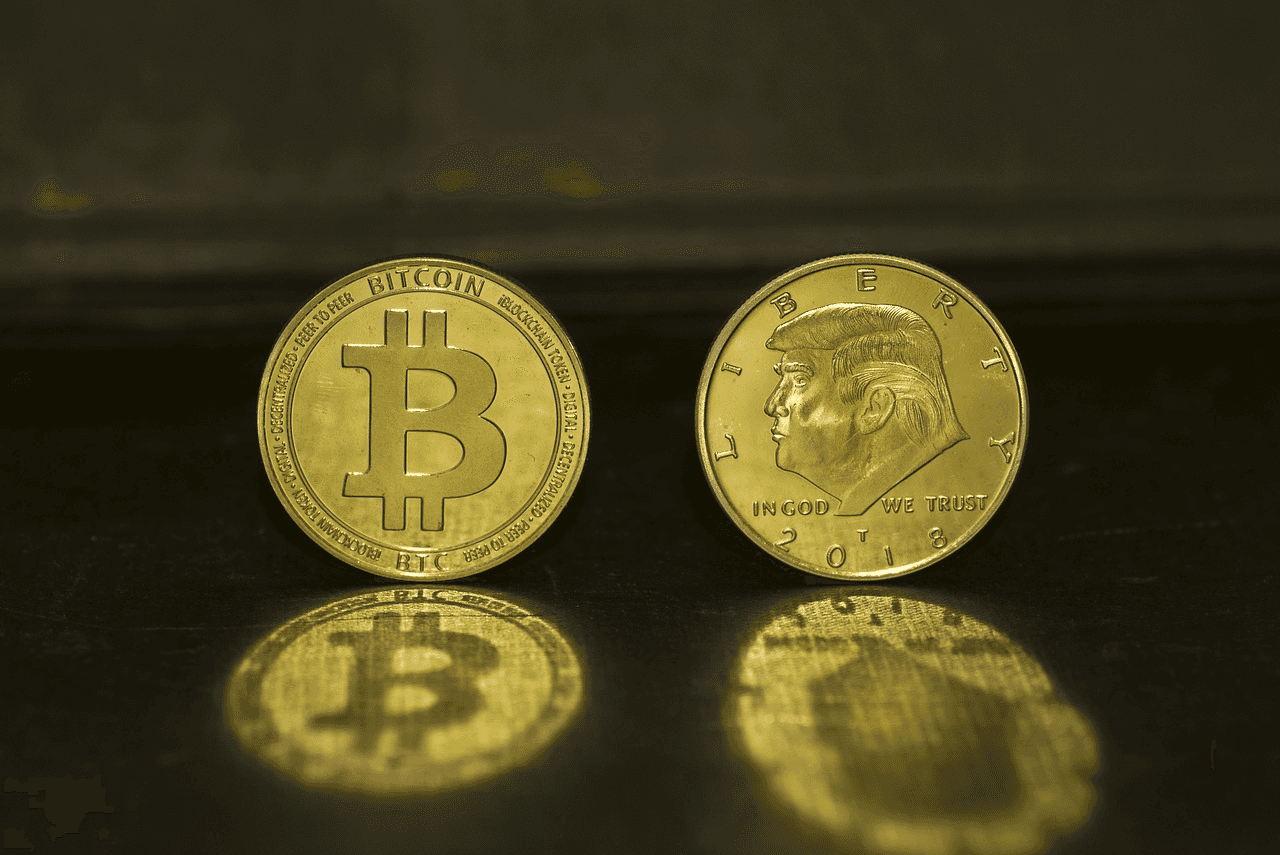
1. Store of Value Amid Fiat Fluctuations
Tariffs often result in:
Rising prices for imported goods
Inflationary pressures
Central bank interventions
Unlike fiat currencies, Bitcoin operates outside political control. Investors increasingly treat it as "digital gold", especially when inflation looms. With the U.S. inflation rate hovering at 3.6%, Bitcoin offers a hedge without ties to monetary policy.
2. Limited Correlation With Equities
While major indices faltered, Bitcoin has stayed resilient:
BTC held steady above $63,000, with minor dips and quick rebounds.
Trading volume increased by 12% week-over-week, indicating sustained interest.
This decoupling reinforces Bitcoin's position as a non-correlated asset, especially during geopolitical or trade-driven stress events.
Analyst Predictions: What Year-End 2025 Could Look Like
Positive Momentum Indicators
Several factors point to a bullish close to 2025:
ETF Inflows: U.S.-approved Bitcoin ETFs have seen $2.3 billion in inflows since September, led by institutional players.
Supply Constraints: Post-halving effects are in play, reducing miner selling pressure.
On-chain data: Long-term holders have increased their share of BTC supply to 78%, signaling confidence.
Target Price Ranges
Leading analysts have shared optimistic year-end targets:
Bloomberg Intelligence: BTC could hit $75,000 by December, barring black swan events.
ARK Invest: Predicts a base case of $80,000 driven by institutional adoption and retail rebound.
Glassnode: Reports suggest “strong hand accumulation” is building a solid support level around $60,000.
Broader Context: Bitcoin in a Tariff-Era Economy
BTC as Geopolitical Hedge
As the U.S. and China gear up for trade tensions, multinational corporations and investors are rethinking currency exposure and capital allocation. Bitcoin offers:
Portability across borders
Non-sovereign value storage
24/7 liquidity
In countries vulnerable to secondary effects of U.S.-China tariffs, like those in Southeast Asia, BTC is increasingly being adopted by small businesses and exporters as a hedge against currency volatility.
Narrative Shift: From Speculation to Stability
Over the years, Bitcoin has shifted from being viewed as a speculative asset to a legitimate macro asset. With each macro event—from wars to trade conflicts—BTC’s role becomes clearer:
It’s not just for profit—it’s for protection.
It’s not anti-government—it’s anti-uncertainty.
What Investors Should Watch Moving Forward
Key Indicators to Monitor
Tariff Policy Progression: Will Trump return to power, and will tariffs be enacted?
Federal Reserve’s Stance: Continued rate pauses or cuts could fuel BTC rallies.
ETF Expansion: New regions like the EU and Asia may open ETF floodgates.
Adoption Metrics: Keep an eye on wallet growth, hash rate, and L2 scaling solutions.
Tips for BTC Investors
Stay diversified: Even with bullish outlooks, balance your crypto exposure.
Follow on-chain metrics: Tools like Glassnode and IntoTheBlock offer real-time sentiment signals.
Watch policy trends: Bitcoin often reacts not to action, but anticipation.
Conclusion: The Bull Case Stands Strong
Despite rising trade tensions and Trump’s aggressive tariff talk, Bitcoin’s year-end outlook remains solid. With macro uncertainty brewing, BTC continues to attract capital as a hedge, a store of value, and a beacon of financial sovereignty. Far from being dragged down by geopolitical noise, it is rising above it—cementing its place in the portfolios of those who see beyond short-term headlines.
For investors and enthusiasts, now is the time to stay informed, stay calm, and stay the course. Bitcoin may once again prove that in uncertain times, certainty is digital.