Central African Republic to Launch Tokenized Land Sales on Solana
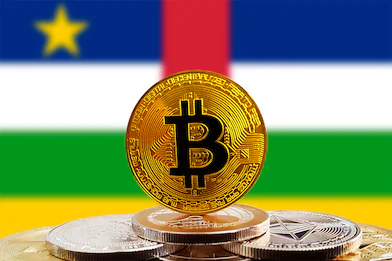
In a groundbreaking move that could reshape how nations approach land ownership, the Central African Republic (CAR) is launching Africa’s first tokenized land sale on the Solana blockchain. This bold initiative, blending traditional real estate with Web3 innovation, aims to digitize property rights and attract global crypto investors to a country eager to reinvent its economic narrative.
CAR's move comes on the heels of its 2022 declaration of Bitcoin as legal tender—an ambitious act that initially drew skepticism but has since laid the foundation for a broader crypto-based development model. Now, by turning physical land into digital assets on Solana, the country is betting on transparency, inclusivity, and global participation to transform its socio-economic future.
Why Land? Why Now?
A Country Rich in Resources, Poor in Access
Despite its abundant natural resources, the Central African Republic remains one of the world’s poorest nations. Roughly 71% of its population lives below the poverty line, according to World Bank estimates. For years, inefficient land administration and weak property rights enforcement have discouraged both domestic and international investments.
With the tokenization of land, the CAR government aims to bypass historical inefficiencies by introducing:
Digitally verified ownership
Immutable transaction records
Global access to local assets
This shift could prove revolutionary—not just for the CAR, but for other developing countries wrestling with similar issues.
Why Solana?
Speed, Scalability, and Low Fees
Solana was chosen as the blockchain of choice for this project due to:
High throughput: 65,000+ transactions per second
Low transaction costs: Fractions of a cent
Scalability: Capable of handling a growing volume of users and trades
Unlike Ethereum, which has faced criticism for high gas fees, Solana provides an efficient platform for the kind of mass adoption the CAR envisions. By leveraging Solana’s infrastructure, the tokenized land initiative ensures both speed and affordability, making it more inclusive to buyers across different economic backgrounds.
How Will It Work?
A Simple, Transparent Model
The tokenized land sale process involves converting physical plots into digital tokens, each representing a stake in a real-world property. Here’s how the rollout is expected to unfold:
Land Parcel Identification: Select public land parcels for tokenization.
Legal Backing: Attach legal documentation to each token.
Minting Tokens: Issue NFTs (non-fungible tokens) on Solana.
Public Sale: Allow both locals and foreigners to purchase land tokens.
Ownership Records: Update decentralized registry with each transaction.
Buyers will receive digital certificates of ownership backed by the national government, offering both legitimacy and enforceability.
Real-World Impact: Building Trust and Value
Unlocking a Frozen Asset Class
Traditionally, land in the CAR has been an underutilized asset. Bureaucratic red tape and a lack of records have often made it nearly impossible to prove ownership. Tokenization turns that model on its head by:
Creating clear ownership trails
Reducing fraud and corruption
Attracting diaspora and global investors
Moreover, local citizens—many of whom remain unbanked—could now gain access to global investment networks using only a smartphone and an internet connection.
Challenges and Cautions
Regulatory, Social, and Technological Hurdles
While the potential is enormous, experts warn of several challenges:
Legal recognition of digital titles: Ensuring courts recognize blockchain-based ownership.
Digital literacy: Educating a largely offline population about using Web3 tools.
Fraud prevention: Ensuring safeguards against bad actors in the crypto space.
Yet, for the CAR, this initiative is not about rushing to the finish line. It’s about laying the foundation for a long-term transformation.
A Story of Courage and Reinvention
For 28-year-old Lucien, a tech enthusiast from Bangui, this project represents more than just digital assets. “My grandfather farmed the same land for 50 years, but we never had papers to prove it. If this can give us that security—on blockchain, no less—it’s like reclaiming our history,” he says.
And Lucien’s story may soon echo across a nation looking to rewrite its identity—not through aid, but through innovation.
Conclusion: A Bold Leap Into the Digital Age
The Central African Republic’s decision to launch tokenized land sales on Solana is both visionary and risky—a rare combination in modern geopolitics. If successful, this could set a precedent for other developing countries to adopt blockchain for public administration. By blending trustless technology with real-world infrastructure, the CAR is planting the seeds of a future where economic inclusion isn’t just a dream, but a distributed ledger away.
Ready to witness a new land revolution? The world is watching—and the CAR is leading.