Crypto Coins vs. Tokens: What’s the Difference and Why It Matters?
Crypto Coins vs. Tokens: What’s the Difference and Why It Matters?
Crypto Coins vs. Tokens: What’s the Difference and Why It Matters?
Crypto Coins vs. Tokens: What’s the Difference and Why It Matters?
Crypto Coins vs. Tokens: What’s the Difference and Why It Matters?
Shashank Kothari
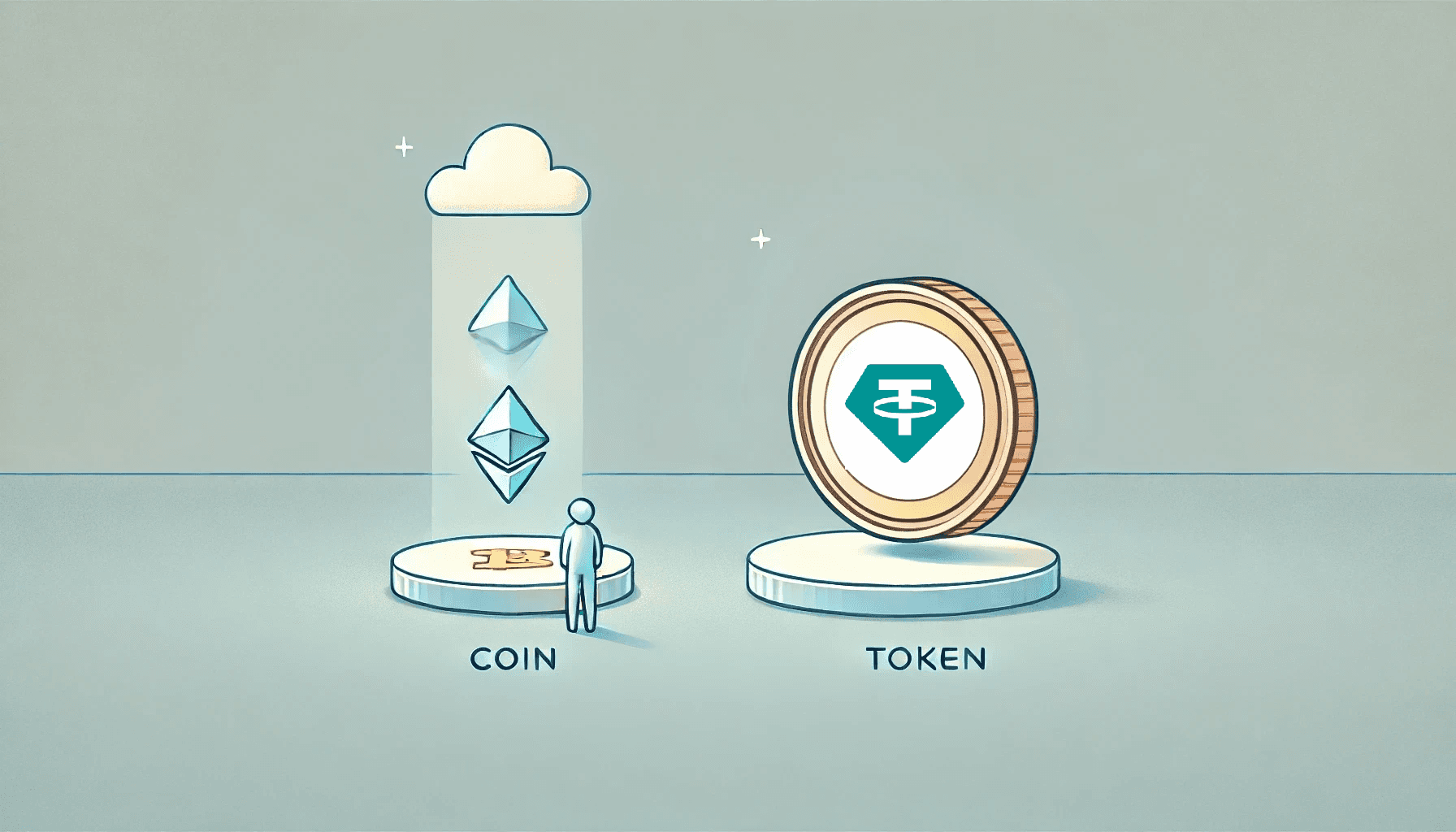
If you’ve ever wondered why it’s called Dogecoin and not Dogetoken, you’re not alone. Most crypto enthusiasts secretly scratch their heads, nodding along in discussions, praying nobody asks them the difference. Maybe it’s just not a coin-cidence. (Sorry, couldn't resist!)
While we often hear words like crypto coin, crypto token, and cryptocurrency used interchangeably, they're actually quite different. Knowing this distinction can help you make smarter decisions in crypto—and make you look a bit smarter in casual conversations, too.
Ready to finally know what you’re talking about? Let’s dive in.
What Is a Crypto Coin?
First things first, crypto coins are like the dollars and cents of the digital world. They’re a form of digital currency native to their very own blockchain networks. Imagine each blockchain as its own little digital country, and the coins are the local currency there.
Bitcoin (BTC) lives on the Bitcoin blockchain, Ethereum (ETH) calls the Ethereum blockchain home, and Litecoin (LTC) operates on—you guessed it—the Litecoin blockchain.
Why Do Crypto Coins Exist?
Crypto coins were initially created as digital alternatives to traditional money. Their main roles are:
Store of Value: Like gold, Bitcoin is often considered a digital store of value.
Medium of Exchange: You can buy goods or services, transfer funds, or trade coins just like you would regular money.
Basically, coins want to replace your wallet (and that loose change you lose under your couch).
Real-world Usage Examples
You can use Bitcoin to buy a coffee, book hotels, or send money overseas without needing a bank. Ethereum’s ETH is frequently used to pay transaction fees for apps and services on its blockchain. Litecoin is famously fast and cheap for everyday transactions.
In short, coins are digital money—plain and simple.
What Is a Crypto Token?
Here’s where things get a little trickier—but hang in there, it’s actually quite simple. While coins live on their own blockchain, crypto tokens rent space on someone else’s. They’re built using smart contracts (like tiny digital agreements) and are usually created for specific purposes within decentralized apps (dApps) and blockchain platforms.
Think of crypto tokens as arcade tokens or coupons. You exchange real money (or crypto coins) to get them, and then you use them for specific purposes within a certain platform.
So, What Are Tokens Good For?
Tokens have way more uses than just buying and selling. A token can represent:
Utility: Think of it like a special arcade token needed to play a specific game or use a service on a blockchain.
Governance: Holding tokens might let you vote on decisions that shape a blockchain platform’s future.
Asset Ownership: Tokens can represent ownership of physical or digital items, from art (NFTs) to real estate.
For instance, USDT (Tether) is a token that represents US dollars digitally, while Chainlink (LINK) tokens allow holders to pay for data services on the blockchain.
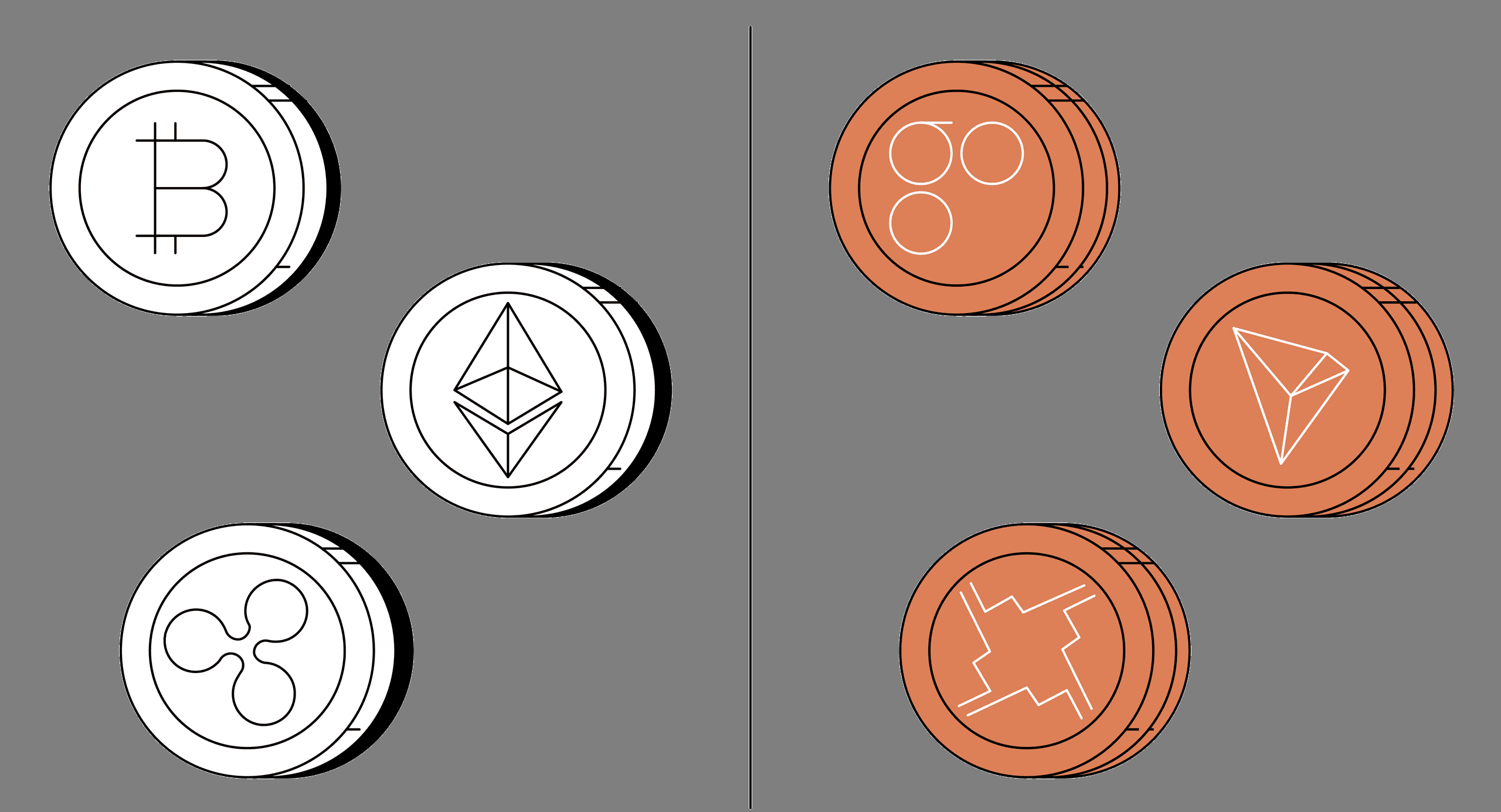
Crypto Coins vs. Crypto Tokens: A Quick but Powerful Comparison
Let’s break this down clearly with a table you can screenshot for later reference (you’re welcome!).
Feature | Crypto Coins | Crypto Tokens |
Blockchain Home | Own blockchain (like BTC or ETH) | Existing blockchain (like Ethereum or Solana) |
Primary Purpose | Digital currency, payment method, store of value | Utility, governance, or representing ownership of assets |
Flexibility | Limited (primarily currency) | Highly flexible (multi-purpose uses) |
Complexity | Difficult (requires own blockchain) | Easier to create (uses existing blockchains) |
Security Model | Secured by own blockchain network | Relies on underlying blockchain’s security |
Supply Control | Usually fixed or limited supply (e.g., Bitcoin’s 21M cap) | Supply set by creators; can vary widely |
Interoperability | Limited to its own blockchain | Can be bridged across blockchains |
Top Examples | Bitcoin (BTC), Ethereum (ETH), Litecoin (LTC), Dogecoin (DOGE) | Tether (USDT), Chainlink (LINK), Shiba Inu (SHIB), Uniswap (UNI) |
In a nutshell:
Coins are like your regular currency—they're primarily for transactions and storing value. Tokens are versatile—they’re like digital vouchers, tickets, or shares, serving purposes beyond just payments.
Conclusion: So, Why Should You Care?
Knowing the difference between crypto coins and tokens might seem trivial, but it actually matters quite a bit. Understanding these basics means you’ll know exactly what you’re investing in, and avoid getting swept away in the latest crypto craze or meme coin hype.
Ready to dive deeper and explore the crypto world with confidence? Stay ahead of the curve and make smarter crypto decisions by checking out CoinCROWD—your go-to destination for the latest crypto news, market insights, and straightforward crypto education.
Because let’s face it: nobody wants to confuse their Dogecoin with a Dogetoken at the next dinner party.
If you’ve ever wondered why it’s called Dogecoin and not Dogetoken, you’re not alone. Most crypto enthusiasts secretly scratch their heads, nodding along in discussions, praying nobody asks them the difference. Maybe it’s just not a coin-cidence. (Sorry, couldn't resist!)
While we often hear words like crypto coin, crypto token, and cryptocurrency used interchangeably, they're actually quite different. Knowing this distinction can help you make smarter decisions in crypto—and make you look a bit smarter in casual conversations, too.
Ready to finally know what you’re talking about? Let’s dive in.
What Is a Crypto Coin?
First things first, crypto coins are like the dollars and cents of the digital world. They’re a form of digital currency native to their very own blockchain networks. Imagine each blockchain as its own little digital country, and the coins are the local currency there.
Bitcoin (BTC) lives on the Bitcoin blockchain, Ethereum (ETH) calls the Ethereum blockchain home, and Litecoin (LTC) operates on—you guessed it—the Litecoin blockchain.
Why Do Crypto Coins Exist?
Crypto coins were initially created as digital alternatives to traditional money. Their main roles are:
Store of Value: Like gold, Bitcoin is often considered a digital store of value.
Medium of Exchange: You can buy goods or services, transfer funds, or trade coins just like you would regular money.
Basically, coins want to replace your wallet (and that loose change you lose under your couch).
Real-world Usage Examples
You can use Bitcoin to buy a coffee, book hotels, or send money overseas without needing a bank. Ethereum’s ETH is frequently used to pay transaction fees for apps and services on its blockchain. Litecoin is famously fast and cheap for everyday transactions.
In short, coins are digital money—plain and simple.
What Is a Crypto Token?
Here’s where things get a little trickier—but hang in there, it’s actually quite simple. While coins live on their own blockchain, crypto tokens rent space on someone else’s. They’re built using smart contracts (like tiny digital agreements) and are usually created for specific purposes within decentralized apps (dApps) and blockchain platforms.
Think of crypto tokens as arcade tokens or coupons. You exchange real money (or crypto coins) to get them, and then you use them for specific purposes within a certain platform.
So, What Are Tokens Good For?
Tokens have way more uses than just buying and selling. A token can represent:
Utility: Think of it like a special arcade token needed to play a specific game or use a service on a blockchain.
Governance: Holding tokens might let you vote on decisions that shape a blockchain platform’s future.
Asset Ownership: Tokens can represent ownership of physical or digital items, from art (NFTs) to real estate.
For instance, USDT (Tether) is a token that represents US dollars digitally, while Chainlink (LINK) tokens allow holders to pay for data services on the blockchain.
Crypto Coins vs. Crypto Tokens: A Quick but Powerful Comparison
Let’s break this down clearly with a table you can screenshot for later reference (you’re welcome!).
Feature | Crypto Coins | Crypto Tokens |
Blockchain Home | Own blockchain (like BTC or ETH) | Existing blockchain (like Ethereum or Solana) |
Primary Purpose | Digital currency, payment method, store of value | Utility, governance, or representing ownership of assets |
Flexibility | Limited (primarily currency) | Highly flexible (multi-purpose uses) |
Complexity | Difficult (requires own blockchain) | Easier to create (uses existing blockchains) |
Security Model | Secured by own blockchain network | Relies on underlying blockchain’s security |
Supply Control | Usually fixed or limited supply (e.g., Bitcoin’s 21M cap) | Supply set by creators; can vary widely |
Interoperability | Limited to its own blockchain | Can be bridged across blockchains |
Top Examples | Bitcoin (BTC), Ethereum (ETH), Litecoin (LTC), Dogecoin (DOGE) | Tether (USDT), Chainlink (LINK), Shiba Inu (SHIB), Uniswap (UNI) |
In a nutshell:
Coins are like your regular currency—they're primarily for transactions and storing value. Tokens are versatile—they’re like digital vouchers, tickets, or shares, serving purposes beyond just payments.
Conclusion: So, Why Should You Care?
Knowing the difference between crypto coins and tokens might seem trivial, but it actually matters quite a bit. Understanding these basics means you’ll know exactly what you’re investing in, and avoid getting swept away in the latest crypto craze or meme coin hype.
Ready to dive deeper and explore the crypto world with confidence? Stay ahead of the curve and make smarter crypto decisions by checking out CoinCROWD—your go-to destination for the latest crypto news, market insights, and straightforward crypto education.
Because let’s face it: nobody wants to confuse their Dogecoin with a Dogetoken at the next dinner party.
If you’ve ever wondered why it’s called Dogecoin and not Dogetoken, you’re not alone. Most crypto enthusiasts secretly scratch their heads, nodding along in discussions, praying nobody asks them the difference. Maybe it’s just not a coin-cidence. (Sorry, couldn't resist!)
While we often hear words like crypto coin, crypto token, and cryptocurrency used interchangeably, they're actually quite different. Knowing this distinction can help you make smarter decisions in crypto—and make you look a bit smarter in casual conversations, too.
Ready to finally know what you’re talking about? Let’s dive in.
What Is a Crypto Coin?
First things first, crypto coins are like the dollars and cents of the digital world. They’re a form of digital currency native to their very own blockchain networks. Imagine each blockchain as its own little digital country, and the coins are the local currency there.
Bitcoin (BTC) lives on the Bitcoin blockchain, Ethereum (ETH) calls the Ethereum blockchain home, and Litecoin (LTC) operates on—you guessed it—the Litecoin blockchain.
Why Do Crypto Coins Exist?
Crypto coins were initially created as digital alternatives to traditional money. Their main roles are:
Store of Value: Like gold, Bitcoin is often considered a digital store of value.
Medium of Exchange: You can buy goods or services, transfer funds, or trade coins just like you would regular money.
Basically, coins want to replace your wallet (and that loose change you lose under your couch).
Real-world Usage Examples
You can use Bitcoin to buy a coffee, book hotels, or send money overseas without needing a bank. Ethereum’s ETH is frequently used to pay transaction fees for apps and services on its blockchain. Litecoin is famously fast and cheap for everyday transactions.
In short, coins are digital money—plain and simple.
What Is a Crypto Token?
Here’s where things get a little trickier—but hang in there, it’s actually quite simple. While coins live on their own blockchain, crypto tokens rent space on someone else’s. They’re built using smart contracts (like tiny digital agreements) and are usually created for specific purposes within decentralized apps (dApps) and blockchain platforms.
Think of crypto tokens as arcade tokens or coupons. You exchange real money (or crypto coins) to get them, and then you use them for specific purposes within a certain platform.
So, What Are Tokens Good For?
Tokens have way more uses than just buying and selling. A token can represent:
Utility: Think of it like a special arcade token needed to play a specific game or use a service on a blockchain.
Governance: Holding tokens might let you vote on decisions that shape a blockchain platform’s future.
Asset Ownership: Tokens can represent ownership of physical or digital items, from art (NFTs) to real estate.
For instance, USDT (Tether) is a token that represents US dollars digitally, while Chainlink (LINK) tokens allow holders to pay for data services on the blockchain.
Crypto Coins vs. Crypto Tokens: A Quick but Powerful Comparison
Let’s break this down clearly with a table you can screenshot for later reference (you’re welcome!).
Feature | Crypto Coins | Crypto Tokens |
Blockchain Home | Own blockchain (like BTC or ETH) | Existing blockchain (like Ethereum or Solana) |
Primary Purpose | Digital currency, payment method, store of value | Utility, governance, or representing ownership of assets |
Flexibility | Limited (primarily currency) | Highly flexible (multi-purpose uses) |
Complexity | Difficult (requires own blockchain) | Easier to create (uses existing blockchains) |
Security Model | Secured by own blockchain network | Relies on underlying blockchain’s security |
Supply Control | Usually fixed or limited supply (e.g., Bitcoin’s 21M cap) | Supply set by creators; can vary widely |
Interoperability | Limited to its own blockchain | Can be bridged across blockchains |
Top Examples | Bitcoin (BTC), Ethereum (ETH), Litecoin (LTC), Dogecoin (DOGE) | Tether (USDT), Chainlink (LINK), Shiba Inu (SHIB), Uniswap (UNI) |
In a nutshell:
Coins are like your regular currency—they're primarily for transactions and storing value. Tokens are versatile—they’re like digital vouchers, tickets, or shares, serving purposes beyond just payments.
Conclusion: So, Why Should You Care?
Knowing the difference between crypto coins and tokens might seem trivial, but it actually matters quite a bit. Understanding these basics means you’ll know exactly what you’re investing in, and avoid getting swept away in the latest crypto craze or meme coin hype.
Ready to dive deeper and explore the crypto world with confidence? Stay ahead of the curve and make smarter crypto decisions by checking out CoinCROWD—your go-to destination for the latest crypto news, market insights, and straightforward crypto education.
Because let’s face it: nobody wants to confuse their Dogecoin with a Dogetoken at the next dinner party.

Your ultimate crypto wallet
Join our growing community for exclusive perks!
Your ultimate crypto wallet
Join our growing community for exclusive perks!
Your ultimate crypto wallet
Join our growing community for exclusive perks!
Your ultimate crypto wallet
Join our growing community for exclusive perks!
Your ultimate crypto wallet
Join our growing community for exclusive perks!
Your ultimate crypto wallet
Join our growing community for exclusive perks!