Crypto Wallet Market: Growth Trends, Key Players & Where CoinCROWD Fits
Crypto Wallet Market: Growth Trends, Key Players & Where CoinCROWD Fits
Crypto Wallet Market: Growth Trends, Key Players & Where CoinCROWD Fits
Crypto Wallet Market: Growth Trends, Key Players & Where CoinCROWD Fits
Crypto Wallet Market: Growth Trends, Key Players & Where CoinCROWD Fits
Shashank Kothari

The crypto wallet industry is witnessing unprecedented expansion, driven by a surge in digital asset adoption and evolving consumer preferences for self-custody. According to a recent
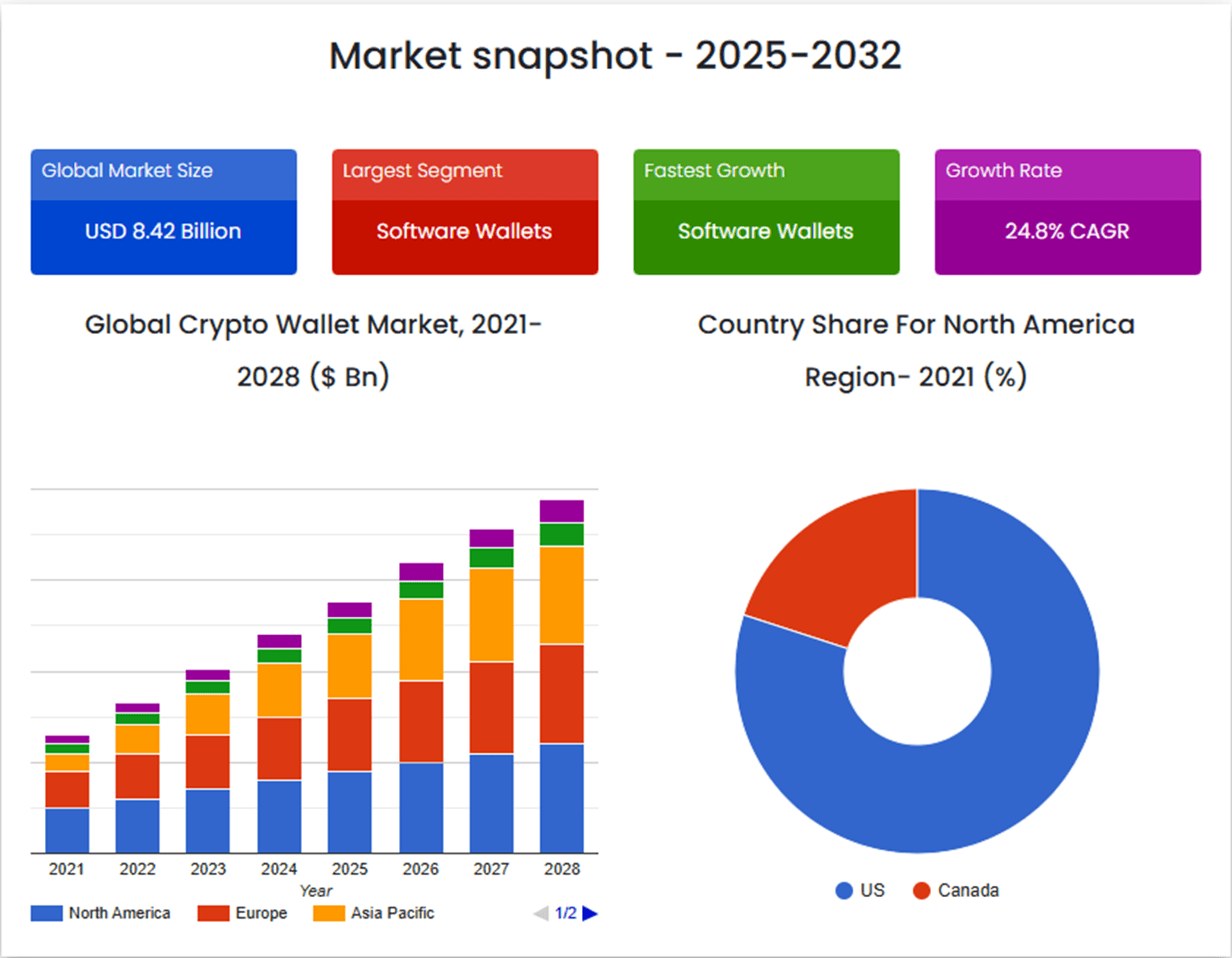
report by SkyQuest, the Crypto Wallet Market was valued at USD 8.42 Billion in 2023 and is expected to grow to USD 77.21 Billion by 2032, registering a CAGR of 24.8% over the forecast period (2025–2032). This growth underscores the critical role wallets play in safeguarding private keys and granting users the flexibility to transact with cryptocurrencies like Bitcoin, Ethereum, and stablecoins.
In this article, we’ll delve into the market’s overall trajectory, examine the factors fueling its rise, and spotlight CoinCROWD—a wallet solution aiming to deliver robust security and a user-centric experience in a fast-evolving environment.
The Crypto Wallet Market Overview
Crypto wallets have come a long way since Bitcoin’s inception. The first version, reportedly devised around 2009 alongside Bitcoin’s protocol, was rudimentary—enabling individuals to store and access their private keys on a local device. Today’s wallets vary significantly, from simple mobile apps to hardware solutions equipped with advanced encryption and Bluetooth technology.
Recent figures illustrate just how rapidly the wallet landscape is expanding:
Market size reached USD 8.42 Billion in 2023 and is on a path to USD 10.51 Billion by 2024.
With the growing appeal of decentralized finance (DeFi) and NFTs, wallets must now support more than just basic storage. They’ve become gateways to a wider digital ecosystem.
At the heart of this growth is an emphasis on user autonomy. Wallets effectively act as “digital safes” for storing cryptographic keys—proof of asset ownership—enabling people to control their holdings without relying on centralized intermediaries.
Growth Trends in the Crypto Wallet Market
Surging User Adoption
The draw toward self-custody exploded after multiple exchange hacks and heightened regulatory scrutiny. Users want full control over their funds, and wallet providers are responding with intuitive interfaces, multi-chain features, and integrated crypto-to-fiat gateways.
Software Wallet Dominance
Software wallets—commonly referred to as “hot wallets”—lead the market in revenue share. Data shows a 190% jump in overall global wallet usage between 2018 and 2020, pointing to the convenience of easy installation and quick transaction times. Though hardware wallets follow in terms of market share, their specialized security features make them especially attractive for long-term storage of larger amounts.
Regional Adoption & Governmental Support
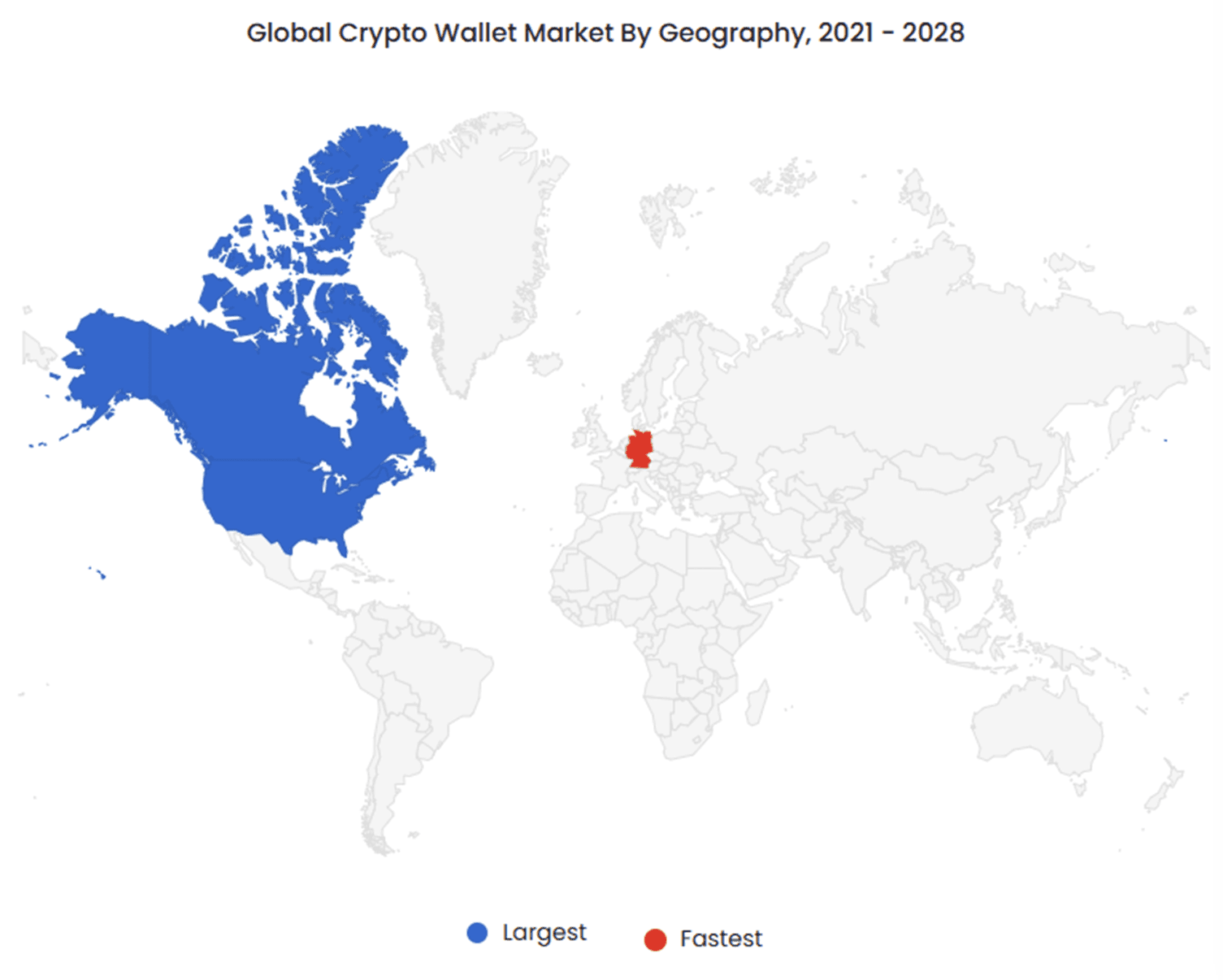
North America: Retains a dominant share, partly due to the U.S. accounting for roughly 80% of the region’s market. Widespread acceptance of Bitcoin and Ethereum, combined with a flourishing tech sector, drives considerable demand for wallets.
Europe: Registers the fastest growing wallet adoption rate, propelled by the EU’s initiatives to create frictionless digital ID and payment systems.
Asia Pacific: Exhibits strong growth due to rising retail investor participation, with countries like India, Japan, and South Korea embracing crypto for both remittances and trading.
Post-Pandemic Acceleration
The shift to digital transactions post-Covid-19 has played a pivotal role in boosting crypto usage. While the pandemic caused short-term market volatility, it also pushed consumers toward contactless payments and alternative financial assets—a trend that wallets have benefited from.
Key Players Dominating the Market

Top-Tier Wallet Providers
MetaMask: Initially Ethereum-focused, now expanding to other chains and enabling DeFi, NFT interactions, and more.
Coinbase Wallet: Gained popularity via its user-friendly design and direct integration with the Coinbase exchange.
Ledger & Trezor: Market leaders in the hardware wallet space, offering secure offline storage for individuals and institutions.
Fintech Giants & Institutional Moves
Corporations like PayPal, Revolut, and Robinhood have integrated crypto transaction features, driving new waves of user adoption. Their large customer bases translate into millions of potential crypto wallet users overnight, amplifying competition for smaller wallet providers.
Local/Regional Niche Players
Wallets specialized in certain regions or with niche functionalities—like stablecoin-based remittances—also claim growing market segments. These providers often focus on local compliance, multi-language support, and partnerships with region-specific financial institutions.
By differentiating through advanced security measures, multi-chain capabilities, or seamless user experiences, these players collectively shape an ecosystem that accelerates mainstream crypto uptake.
Market Segmentation & Analysis by Type
Hot (Software) Wallets
Software wallets account for the largest slice of the market share. They offer instant access to dApps (decentralized applications), allow quick trading, and cater to users who value convenience over maximum security. Such wallets run on smartphones, web browsers, or desktops, supporting major digital assets and stablecoins for instant transactions.
Cold (Hardware) Wallets
Hardware wallets hold the second spot in terms of revenue share. Institutions, high-net-worth individuals, and security-focused users often lean toward them for long-term storage. These wallets utilize secure microcontrollers or chips to protect private keys, offering add-ons like Bluetooth or NFC connectivity.
Paper Wallets & Other Methods
Though significantly smaller in adoption, paper wallets remain an ultra-low-tech option for those seeking an offline method. They involve printing or writing down public and private keys, making them practically hack-proof but potentially vulnerable to physical loss or damage.
Challenges & Barriers in the Crypto Wallet Market
Regulatory Uncertainty
Crypto’s legal standing varies widely: some countries encourage digital asset adoption with favorable policies, while others impose strict limitations. This patchwork can slow wallet adoption, particularly in regions with ambiguous or rapidly changing regulations.
Security Concerns
Even as hardware and software solutions improve, scammers and hackers find new ways to exploit user oversight. Phishing attacks, compromised seed phrases, and Trojanized wallet applications remain threats.
User Education & Experience
Despite streamlined user interfaces, crypto can still intimidate those unfamiliar with private keys, gas fees, or blockchain confirmations. Clear in-app guides and responsive customer support are essential to lowering these barriers.
Price Volatility
Unpredictable fluctuations in crypto valuations can hinder mainstream acceptance. Stablecoins mitigate some of this risk, but new users may still find the market’s volatility off-putting.
Where CoinCROWD Fits into the Evolving Landscape

Multi-Chain Capability & Ease of Use
CoinCROWD aims to break down the complexity of handling multiple blockchain networks. Through an intuitive interface, users can manage assets across Ethereum, BNB, Solana, and other chains without juggling different wallets. This approach answers the software wallet trend of cross-chain compatibility, enabling a frictionless experience for DeFi, NFT trading, and more.
Advanced Security & User Autonomy
Recognizing heightened concerns around hacks and unauthorized access, CoinCROWD employs robust encryption, passcode locks, and planned multi-signature transactions. These measures blend the convenience of software solutions with the security standards typically found in hardware wallets.
Aligned With Growth Trends
Software Dominance: By offering a user-friendly, mobile-first wallet, CoinCROWD stands poised to attract the largest market segment—those who prioritize accessibility and quick setup.
Global Adoption: CoinCROWD’s vision extends beyond a single region, preparing for strategic partnerships and localized compliance protocols as the brand scales into North America, Europe, and Asia Pacific.
Future-Proof Roadmap
Looking ahead, CoinCROWD plans to integrate lightning-fast transaction features, advanced staking options, and in-app bridging to layer-2 networks. These updates aim to ride the wave of the crypto wallet market’s projected 24.8% CAGR, capturing a portion of the multi-billion-dollar industry as users diversify across different blockchains and use cases.
Conclusion
The crypto wallet market is on a path to reach USD 77.21 Billion by 2032, reflecting a fast-moving industry where user autonomy, multi-chain flexibility, and robust security are paramount. Software wallets’ dominance signals a future focused on convenience and interoperability, while hardware solutions provide an elevated security layer for more conservative holders. Yet both segments still have room to evolve, especially as DeFi, NFTs, and digital assets continue to reshape finance.
With its commitment to secure, multi-chain operations and user-friendly design, CoinCROWD is positioned to tap into these shifting dynamics. As the market expands, CoinCROWD’s roadmap points toward an ecosystem ready to serve a global audience—bridging the gap between everyday users seeking simplicity and power users demanding cutting-edge functionality. If current trends hold, the crypto wallet landscape will only become more indispensable, and CoinCROWD aims to be front and center in that journey.
For additional insights and statistics, feel free to explore the
full report by SkyQuest, offering detailed market forecasts and regional analyses. By staying informed and adapting to evolving demands, both users and wallet providers can thrive in this ever-expanding digital frontier.
The crypto wallet industry is witnessing unprecedented expansion, driven by a surge in digital asset adoption and evolving consumer preferences for self-custody. According to a recent
report by SkyQuest, the Crypto Wallet Market was valued at USD 8.42 Billion in 2023 and is expected to grow to USD 77.21 Billion by 2032, registering a CAGR of 24.8% over the forecast period (2025–2032). This growth underscores the critical role wallets play in safeguarding private keys and granting users the flexibility to transact with cryptocurrencies like Bitcoin, Ethereum, and stablecoins.
In this article, we’ll delve into the market’s overall trajectory, examine the factors fueling its rise, and spotlight CoinCROWD—a wallet solution aiming to deliver robust security and a user-centric experience in a fast-evolving environment.
The Crypto Wallet Market Overview
Crypto wallets have come a long way since Bitcoin’s inception. The first version, reportedly devised around 2009 alongside Bitcoin’s protocol, was rudimentary—enabling individuals to store and access their private keys on a local device. Today’s wallets vary significantly, from simple mobile apps to hardware solutions equipped with advanced encryption and Bluetooth technology.
Recent figures illustrate just how rapidly the wallet landscape is expanding:
Market size reached USD 8.42 Billion in 2023 and is on a path to USD 10.51 Billion by 2024.
With the growing appeal of decentralized finance (DeFi) and NFTs, wallets must now support more than just basic storage. They’ve become gateways to a wider digital ecosystem.
At the heart of this growth is an emphasis on user autonomy. Wallets effectively act as “digital safes” for storing cryptographic keys—proof of asset ownership—enabling people to control their holdings without relying on centralized intermediaries.
Growth Trends in the Crypto Wallet Market
Surging User Adoption
The draw toward self-custody exploded after multiple exchange hacks and heightened regulatory scrutiny. Users want full control over their funds, and wallet providers are responding with intuitive interfaces, multi-chain features, and integrated crypto-to-fiat gateways.
Software Wallet Dominance
Software wallets—commonly referred to as “hot wallets”—lead the market in revenue share. Data shows a 190% jump in overall global wallet usage between 2018 and 2020, pointing to the convenience of easy installation and quick transaction times. Though hardware wallets follow in terms of market share, their specialized security features make them especially attractive for long-term storage of larger amounts.
Regional Adoption & Governmental Support
North America: Retains a dominant share, partly due to the U.S. accounting for roughly 80% of the region’s market. Widespread acceptance of Bitcoin and Ethereum, combined with a flourishing tech sector, drives considerable demand for wallets.
Europe: Registers the fastest growing wallet adoption rate, propelled by the EU’s initiatives to create frictionless digital ID and payment systems.
Asia Pacific: Exhibits strong growth due to rising retail investor participation, with countries like India, Japan, and South Korea embracing crypto for both remittances and trading.
Post-Pandemic Acceleration
The shift to digital transactions post-Covid-19 has played a pivotal role in boosting crypto usage. While the pandemic caused short-term market volatility, it also pushed consumers toward contactless payments and alternative financial assets—a trend that wallets have benefited from.
Key Players Dominating the Market
Top-Tier Wallet Providers
MetaMask: Initially Ethereum-focused, now expanding to other chains and enabling DeFi, NFT interactions, and more.
Coinbase Wallet: Gained popularity via its user-friendly design and direct integration with the Coinbase exchange.
Ledger & Trezor: Market leaders in the hardware wallet space, offering secure offline storage for individuals and institutions.
Fintech Giants & Institutional Moves
Corporations like PayPal, Revolut, and Robinhood have integrated crypto transaction features, driving new waves of user adoption. Their large customer bases translate into millions of potential crypto wallet users overnight, amplifying competition for smaller wallet providers.
Local/Regional Niche Players
Wallets specialized in certain regions or with niche functionalities—like stablecoin-based remittances—also claim growing market segments. These providers often focus on local compliance, multi-language support, and partnerships with region-specific financial institutions.
By differentiating through advanced security measures, multi-chain capabilities, or seamless user experiences, these players collectively shape an ecosystem that accelerates mainstream crypto uptake.
Market Segmentation & Analysis by Type
Hot (Software) Wallets
Software wallets account for the largest slice of the market share. They offer instant access to dApps (decentralized applications), allow quick trading, and cater to users who value convenience over maximum security. Such wallets run on smartphones, web browsers, or desktops, supporting major digital assets and stablecoins for instant transactions.
Cold (Hardware) Wallets
Hardware wallets hold the second spot in terms of revenue share. Institutions, high-net-worth individuals, and security-focused users often lean toward them for long-term storage. These wallets utilize secure microcontrollers or chips to protect private keys, offering add-ons like Bluetooth or NFC connectivity.
Paper Wallets & Other Methods
Though significantly smaller in adoption, paper wallets remain an ultra-low-tech option for those seeking an offline method. They involve printing or writing down public and private keys, making them practically hack-proof but potentially vulnerable to physical loss or damage.
Challenges & Barriers in the Crypto Wallet Market
Regulatory Uncertainty
Crypto’s legal standing varies widely: some countries encourage digital asset adoption with favorable policies, while others impose strict limitations. This patchwork can slow wallet adoption, particularly in regions with ambiguous or rapidly changing regulations.
Security Concerns
Even as hardware and software solutions improve, scammers and hackers find new ways to exploit user oversight. Phishing attacks, compromised seed phrases, and Trojanized wallet applications remain threats.
User Education & Experience
Despite streamlined user interfaces, crypto can still intimidate those unfamiliar with private keys, gas fees, or blockchain confirmations. Clear in-app guides and responsive customer support are essential to lowering these barriers.
Price Volatility
Unpredictable fluctuations in crypto valuations can hinder mainstream acceptance. Stablecoins mitigate some of this risk, but new users may still find the market’s volatility off-putting.
Where CoinCROWD Fits into the Evolving Landscape
Multi-Chain Capability & Ease of Use
CoinCROWD aims to break down the complexity of handling multiple blockchain networks. Through an intuitive interface, users can manage assets across Ethereum, BNB, Solana, and other chains without juggling different wallets. This approach answers the software wallet trend of cross-chain compatibility, enabling a frictionless experience for DeFi, NFT trading, and more.
Advanced Security & User Autonomy
Recognizing heightened concerns around hacks and unauthorized access, CoinCROWD employs robust encryption, passcode locks, and planned multi-signature transactions. These measures blend the convenience of software solutions with the security standards typically found in hardware wallets.
Aligned With Growth Trends
Software Dominance: By offering a user-friendly, mobile-first wallet, CoinCROWD stands poised to attract the largest market segment—those who prioritize accessibility and quick setup.
Global Adoption: CoinCROWD’s vision extends beyond a single region, preparing for strategic partnerships and localized compliance protocols as the brand scales into North America, Europe, and Asia Pacific.
Future-Proof Roadmap
Looking ahead, CoinCROWD plans to integrate lightning-fast transaction features, advanced staking options, and in-app bridging to layer-2 networks. These updates aim to ride the wave of the crypto wallet market’s projected 24.8% CAGR, capturing a portion of the multi-billion-dollar industry as users diversify across different blockchains and use cases.
Conclusion
The crypto wallet market is on a path to reach USD 77.21 Billion by 2032, reflecting a fast-moving industry where user autonomy, multi-chain flexibility, and robust security are paramount. Software wallets’ dominance signals a future focused on convenience and interoperability, while hardware solutions provide an elevated security layer for more conservative holders. Yet both segments still have room to evolve, especially as DeFi, NFTs, and digital assets continue to reshape finance.
With its commitment to secure, multi-chain operations and user-friendly design, CoinCROWD is positioned to tap into these shifting dynamics. As the market expands, CoinCROWD’s roadmap points toward an ecosystem ready to serve a global audience—bridging the gap between everyday users seeking simplicity and power users demanding cutting-edge functionality. If current trends hold, the crypto wallet landscape will only become more indispensable, and CoinCROWD aims to be front and center in that journey.
For additional insights and statistics, feel free to explore the
full report by SkyQuest, offering detailed market forecasts and regional analyses. By staying informed and adapting to evolving demands, both users and wallet providers can thrive in this ever-expanding digital frontier.
The crypto wallet industry is witnessing unprecedented expansion, driven by a surge in digital asset adoption and evolving consumer preferences for self-custody. According to a recent
report by SkyQuest, the Crypto Wallet Market was valued at USD 8.42 Billion in 2023 and is expected to grow to USD 77.21 Billion by 2032, registering a CAGR of 24.8% over the forecast period (2025–2032). This growth underscores the critical role wallets play in safeguarding private keys and granting users the flexibility to transact with cryptocurrencies like Bitcoin, Ethereum, and stablecoins.
In this article, we’ll delve into the market’s overall trajectory, examine the factors fueling its rise, and spotlight CoinCROWD—a wallet solution aiming to deliver robust security and a user-centric experience in a fast-evolving environment.
The Crypto Wallet Market Overview
Crypto wallets have come a long way since Bitcoin’s inception. The first version, reportedly devised around 2009 alongside Bitcoin’s protocol, was rudimentary—enabling individuals to store and access their private keys on a local device. Today’s wallets vary significantly, from simple mobile apps to hardware solutions equipped with advanced encryption and Bluetooth technology.
Recent figures illustrate just how rapidly the wallet landscape is expanding:
Market size reached USD 8.42 Billion in 2023 and is on a path to USD 10.51 Billion by 2024.
With the growing appeal of decentralized finance (DeFi) and NFTs, wallets must now support more than just basic storage. They’ve become gateways to a wider digital ecosystem.
At the heart of this growth is an emphasis on user autonomy. Wallets effectively act as “digital safes” for storing cryptographic keys—proof of asset ownership—enabling people to control their holdings without relying on centralized intermediaries.
Growth Trends in the Crypto Wallet Market
Surging User Adoption
The draw toward self-custody exploded after multiple exchange hacks and heightened regulatory scrutiny. Users want full control over their funds, and wallet providers are responding with intuitive interfaces, multi-chain features, and integrated crypto-to-fiat gateways.
Software Wallet Dominance
Software wallets—commonly referred to as “hot wallets”—lead the market in revenue share. Data shows a 190% jump in overall global wallet usage between 2018 and 2020, pointing to the convenience of easy installation and quick transaction times. Though hardware wallets follow in terms of market share, their specialized security features make them especially attractive for long-term storage of larger amounts.
Regional Adoption & Governmental Support
North America: Retains a dominant share, partly due to the U.S. accounting for roughly 80% of the region’s market. Widespread acceptance of Bitcoin and Ethereum, combined with a flourishing tech sector, drives considerable demand for wallets.
Europe: Registers the fastest growing wallet adoption rate, propelled by the EU’s initiatives to create frictionless digital ID and payment systems.
Asia Pacific: Exhibits strong growth due to rising retail investor participation, with countries like India, Japan, and South Korea embracing crypto for both remittances and trading.
Post-Pandemic Acceleration
The shift to digital transactions post-Covid-19 has played a pivotal role in boosting crypto usage. While the pandemic caused short-term market volatility, it also pushed consumers toward contactless payments and alternative financial assets—a trend that wallets have benefited from.
Key Players Dominating the Market
Top-Tier Wallet Providers
MetaMask: Initially Ethereum-focused, now expanding to other chains and enabling DeFi, NFT interactions, and more.
Coinbase Wallet: Gained popularity via its user-friendly design and direct integration with the Coinbase exchange.
Ledger & Trezor: Market leaders in the hardware wallet space, offering secure offline storage for individuals and institutions.
Fintech Giants & Institutional Moves
Corporations like PayPal, Revolut, and Robinhood have integrated crypto transaction features, driving new waves of user adoption. Their large customer bases translate into millions of potential crypto wallet users overnight, amplifying competition for smaller wallet providers.
Local/Regional Niche Players
Wallets specialized in certain regions or with niche functionalities—like stablecoin-based remittances—also claim growing market segments. These providers often focus on local compliance, multi-language support, and partnerships with region-specific financial institutions.
By differentiating through advanced security measures, multi-chain capabilities, or seamless user experiences, these players collectively shape an ecosystem that accelerates mainstream crypto uptake.
Market Segmentation & Analysis by Type
Hot (Software) Wallets
Software wallets account for the largest slice of the market share. They offer instant access to dApps (decentralized applications), allow quick trading, and cater to users who value convenience over maximum security. Such wallets run on smartphones, web browsers, or desktops, supporting major digital assets and stablecoins for instant transactions.
Cold (Hardware) Wallets
Hardware wallets hold the second spot in terms of revenue share. Institutions, high-net-worth individuals, and security-focused users often lean toward them for long-term storage. These wallets utilize secure microcontrollers or chips to protect private keys, offering add-ons like Bluetooth or NFC connectivity.
Paper Wallets & Other Methods
Though significantly smaller in adoption, paper wallets remain an ultra-low-tech option for those seeking an offline method. They involve printing or writing down public and private keys, making them practically hack-proof but potentially vulnerable to physical loss or damage.
Challenges & Barriers in the Crypto Wallet Market
Regulatory Uncertainty
Crypto’s legal standing varies widely: some countries encourage digital asset adoption with favorable policies, while others impose strict limitations. This patchwork can slow wallet adoption, particularly in regions with ambiguous or rapidly changing regulations.
Security Concerns
Even as hardware and software solutions improve, scammers and hackers find new ways to exploit user oversight. Phishing attacks, compromised seed phrases, and Trojanized wallet applications remain threats.
User Education & Experience
Despite streamlined user interfaces, crypto can still intimidate those unfamiliar with private keys, gas fees, or blockchain confirmations. Clear in-app guides and responsive customer support are essential to lowering these barriers.
Price Volatility
Unpredictable fluctuations in crypto valuations can hinder mainstream acceptance. Stablecoins mitigate some of this risk, but new users may still find the market’s volatility off-putting.
Where CoinCROWD Fits into the Evolving Landscape
Multi-Chain Capability & Ease of Use
CoinCROWD aims to break down the complexity of handling multiple blockchain networks. Through an intuitive interface, users can manage assets across Ethereum, BNB, Solana, and other chains without juggling different wallets. This approach answers the software wallet trend of cross-chain compatibility, enabling a frictionless experience for DeFi, NFT trading, and more.
Advanced Security & User Autonomy
Recognizing heightened concerns around hacks and unauthorized access, CoinCROWD employs robust encryption, passcode locks, and planned multi-signature transactions. These measures blend the convenience of software solutions with the security standards typically found in hardware wallets.
Aligned With Growth Trends
Software Dominance: By offering a user-friendly, mobile-first wallet, CoinCROWD stands poised to attract the largest market segment—those who prioritize accessibility and quick setup.
Global Adoption: CoinCROWD’s vision extends beyond a single region, preparing for strategic partnerships and localized compliance protocols as the brand scales into North America, Europe, and Asia Pacific.
Future-Proof Roadmap
Looking ahead, CoinCROWD plans to integrate lightning-fast transaction features, advanced staking options, and in-app bridging to layer-2 networks. These updates aim to ride the wave of the crypto wallet market’s projected 24.8% CAGR, capturing a portion of the multi-billion-dollar industry as users diversify across different blockchains and use cases.
Conclusion
The crypto wallet market is on a path to reach USD 77.21 Billion by 2032, reflecting a fast-moving industry where user autonomy, multi-chain flexibility, and robust security are paramount. Software wallets’ dominance signals a future focused on convenience and interoperability, while hardware solutions provide an elevated security layer for more conservative holders. Yet both segments still have room to evolve, especially as DeFi, NFTs, and digital assets continue to reshape finance.
With its commitment to secure, multi-chain operations and user-friendly design, CoinCROWD is positioned to tap into these shifting dynamics. As the market expands, CoinCROWD’s roadmap points toward an ecosystem ready to serve a global audience—bridging the gap between everyday users seeking simplicity and power users demanding cutting-edge functionality. If current trends hold, the crypto wallet landscape will only become more indispensable, and CoinCROWD aims to be front and center in that journey.
For additional insights and statistics, feel free to explore the
full report by SkyQuest, offering detailed market forecasts and regional analyses. By staying informed and adapting to evolving demands, both users and wallet providers can thrive in this ever-expanding digital frontier.

Your ultimate crypto wallet
Join our growing community for exclusive perks!
Your ultimate crypto wallet
Join our growing community for exclusive perks!
Your ultimate crypto wallet
Join our growing community for exclusive perks!
Your ultimate crypto wallet
Join our growing community for exclusive perks!
Your ultimate crypto wallet
Join our growing community for exclusive perks!
Your ultimate crypto wallet
Join our growing community for exclusive perks!