Real Stories, Real Losses: How Individuals Got Scammed in Crypto And How You Can Avoid It!
Real Stories, Real Losses: How Individuals Got Scammed in Crypto And How You Can Avoid It!
Real Stories, Real Losses: How Individuals Got Scammed in Crypto And How You Can Avoid It!
Real Stories, Real Losses: How Individuals Got Scammed in Crypto And How You Can Avoid It!
Real Stories, Real Losses: How Individuals Got Scammed in Crypto And How You Can Avoid It!
Shashank Kothari

Cryptocurrency has transformed financial landscapes, creating significant opportunities but also substantial risks. With rising crypto adoption, sophisticated scams targeting investors have increased dramatically. Real stories of financial loss serve as powerful lessons, highlighting vulnerabilities and educating users to avoid similar traps. In this article, we delve into actual crypto scam cases, exploring detailed accounts and providing actionable advice tailored to each scenario.
Victim Loses $330K to Delayed Phishing Scam
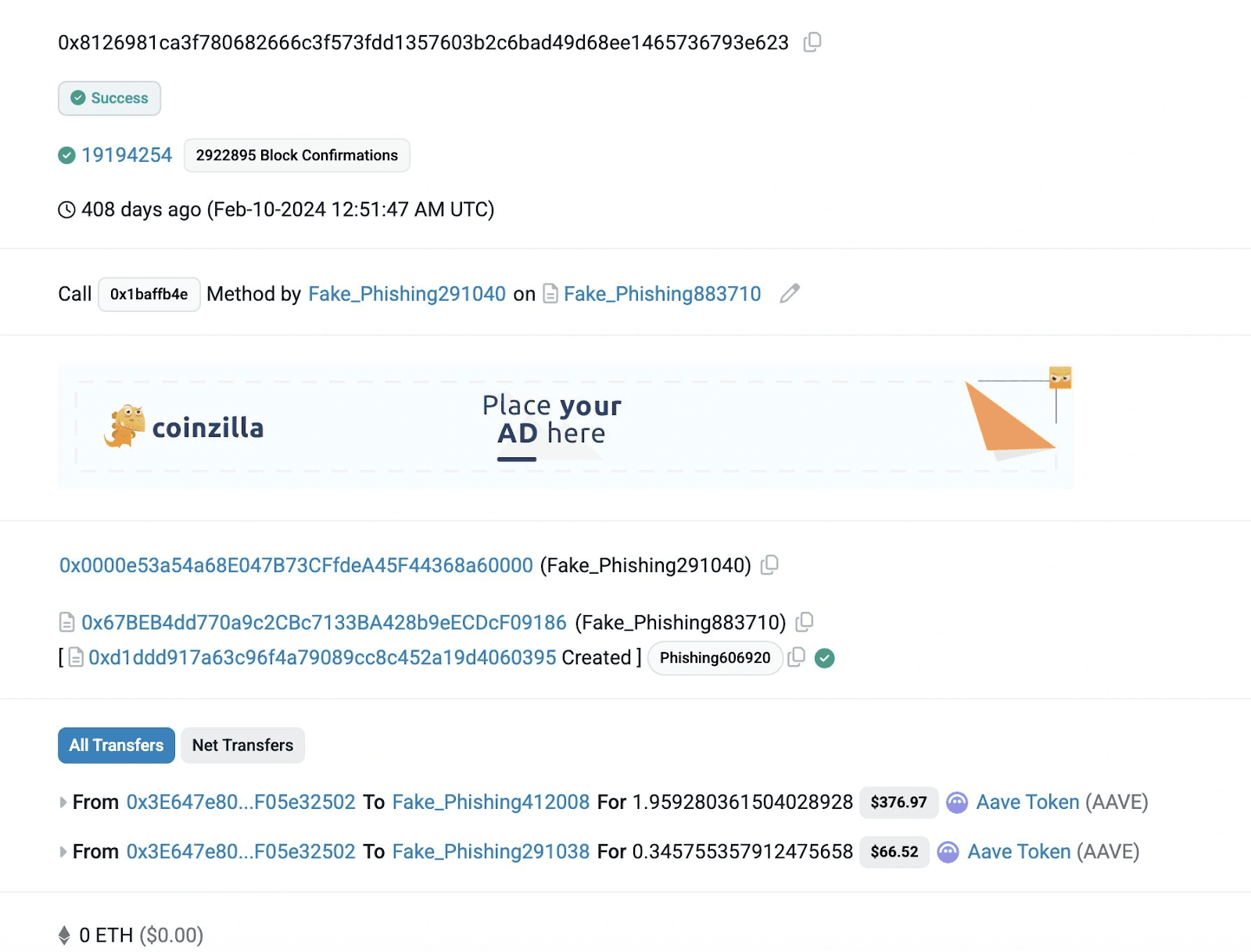
In a distressing phishing attack detailed by ScamSniffer, a crypto investor lost nearly $330,000 in AAVE tokens. This particular scam, termed "approval phishing," involved deceptive authorization obtained long before funds were actually stolen. On February 10, 2024, the victim unknowingly signed a malicious approval transaction, inadvertently granting scammers permission to withdraw tokens.
Remarkably, the scammers waited patiently for 408 days, finally exploiting the permission on March 24, 2025, draining exactly 1,999.23 AAVE tokens (valued at $329,743). Before this theft, the victim's wallet contained approximately $527,498 worth of AAVE, leaving them with just $197,755 post-theft. Interestingly, although other valuable tokens were also available, the scammers targeted only the AAVE holdings.
Approval phishing schemes like this one can remain dormant for extended periods, silently threatening victims long after initial approval. Chainalysis reports suggest that approval phishing scams have resulted in losses approaching $1 billion since May 2021, emphasizing the necessity of vigilance.
Key Lessons to Prevent Such Scams:
To prevent falling victim to approval phishing:
Regularly Audit Permissions: Routinely use tools like Etherscan to review and revoke outdated or unnecessary wallet permissions, preventing dormant approvals from becoming active threats.
Implement Transaction Checks: Before granting permissions, double-check transaction details meticulously, ensuring legitimacy and necessity.
Monitor Wallet Activity: Set up real-time alerts for wallet activities, quickly identifying unauthorized or unexpected transactions.
Fake Crypto Investment Platform “SAXO Group” Scams California Investors out of $1.6M
Two California residents were deceived by scammers operating under the guise of a fraudulent crypto trading platform named "SAXO Group," deceptively similar to the legitimate Saxo Bank. In the first incident, a victim connected through Facebook Messenger, eventually transitioning to WhatsApp. The scammers gradually built trust by sharing stories of successful gold investments.
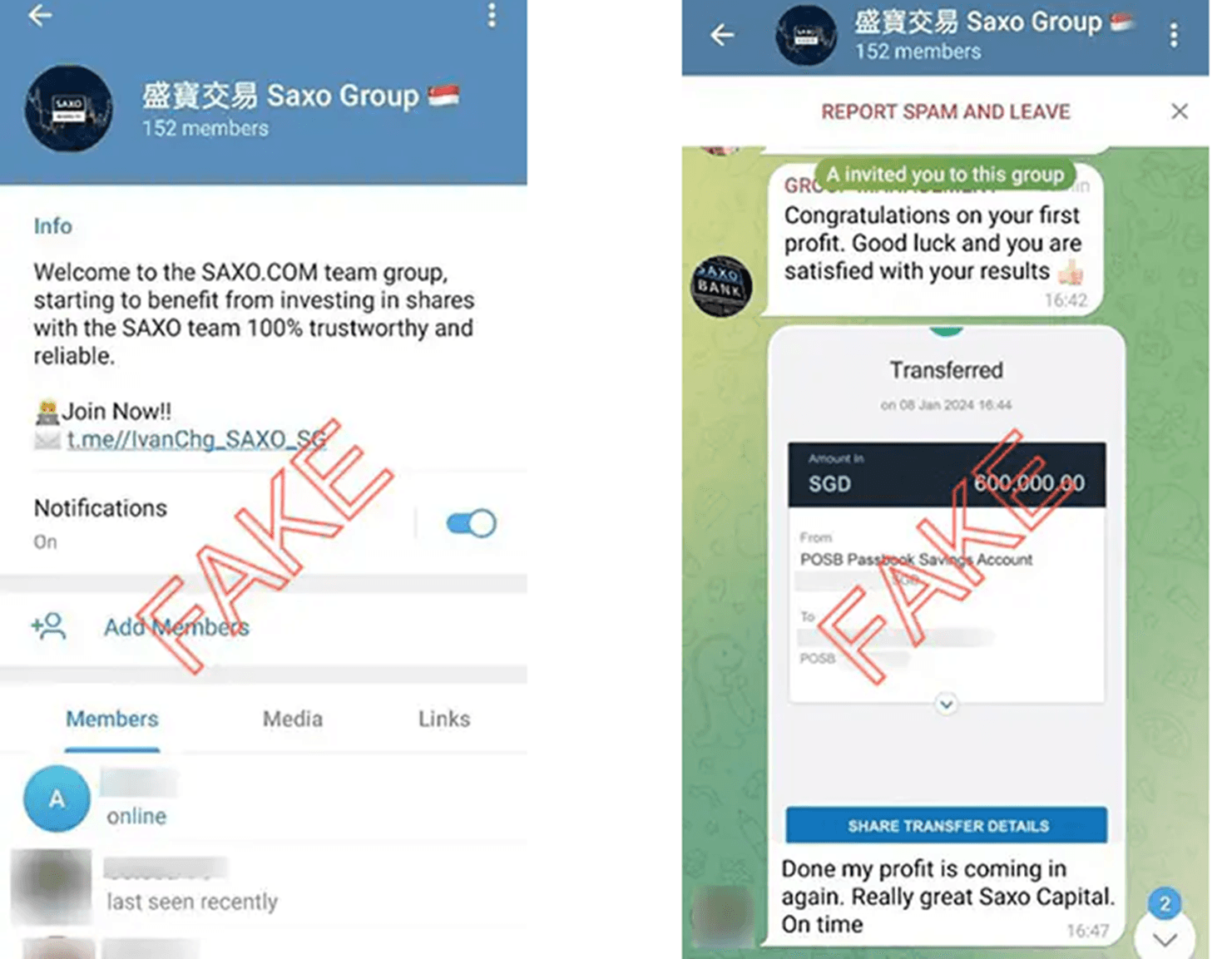
Convinced by these stories, the victim downloaded the "SAXO Group" app and deposited cryptocurrency. Initially, profits seemed substantial, but upon attempting withdrawal, the victim faced an unexpected demand for over $65,000 in fictitious "personal taxes." Unable to meet this requirement, the victim lost around $49,000.
In the second case, the victim was approached via phone by "Lee," who claimed to offer a similarly lucrative gold investment through SAXO Group. Over time, the victim transferred substantial funds, believing the profits were genuine. Eventually, when attempting withdrawal, the scammers demanded more than $500,000 in fabricated "advance taxes," supposedly owed to the Dutch government. After paying this enormous sum, the victim was abruptly abandoned by "Lee," resulting in a total loss exceeding $1.5 million.
Key Lessons to Prevent Such Scams:
To avoid similar investment platform scams:
Verify Platforms Carefully: Always confirm the legitimacy of investment platforms independently through official financial regulatory bodies or credible financial advisors.
Scrutinize Tax and Fee Demands: Genuine financial institutions do not typically request exorbitant upfront fees or taxes. Be skeptical of platforms making such demands, and seek independent verification.
Avoid Pressure from Unknown Sources: Investment recommendations from unfamiliar social media or messaging contacts should be viewed with extreme skepticism, regardless of apparent success stories.
Tripti Lost Rs 12 Lakh to a Fake Crypto Scam on Telegram
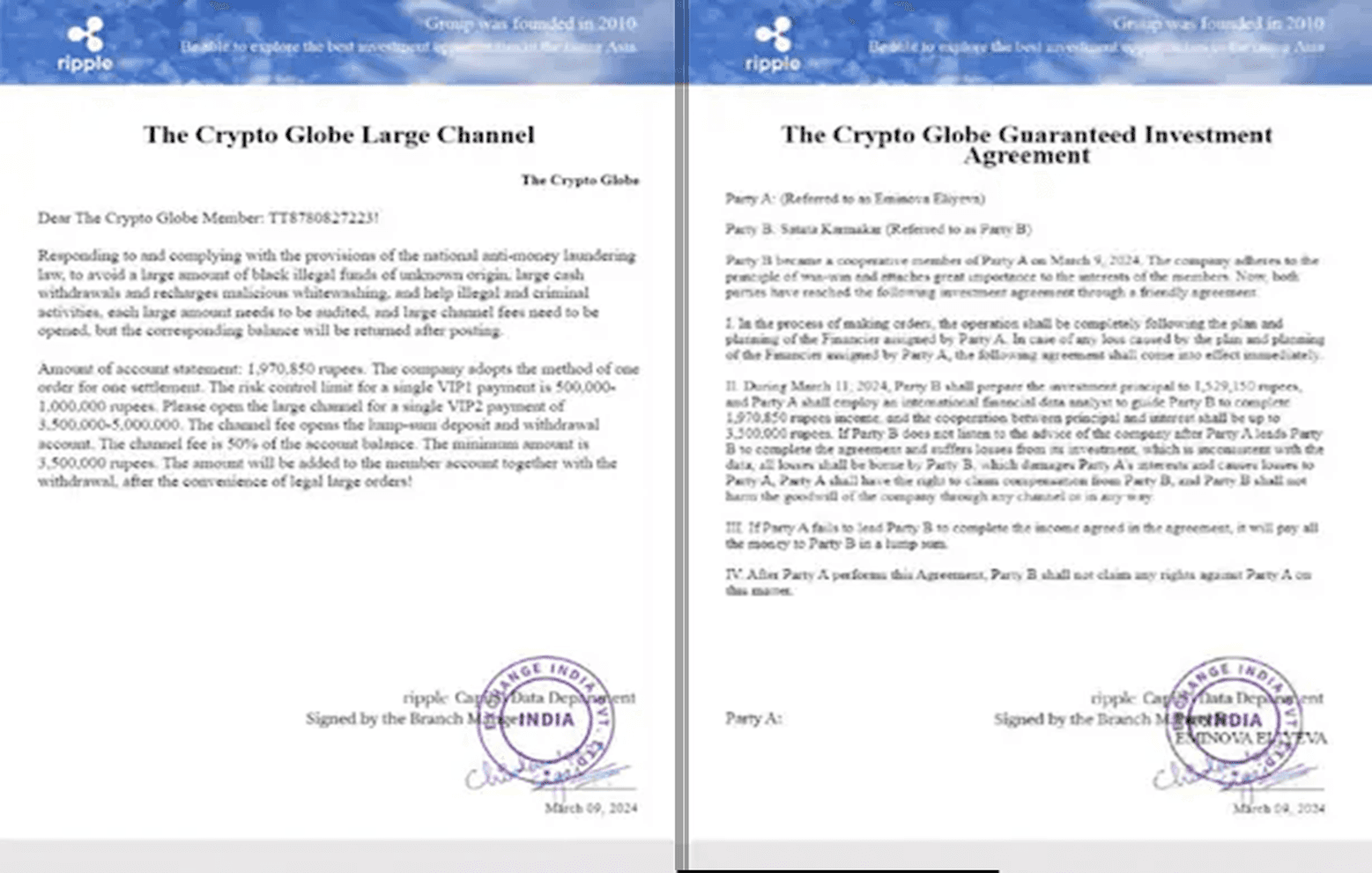
Tripti, residing in Delhi-NCR, experienced devastating financial loss due to a deceptive crypto investment scheme initiated through WhatsApp. Initially approached through a seemingly innocent review rewards program, Tripti received small payments for reviewing hotels online, gaining trust in the scheme.
Eventually, scammers moved communications to Telegram, introducing her to high-paying "merchant tasks." Persuaded by seemingly legitimate interactions, Tripti invested Rs 48,000 into a fraudulent crypto platform named 'cryptoglobe.' Subsequent withdrawal attempts led scammers to demand additional deposits. Under significant peer pressure from fake "investors" within the group, Tripti invested even more money, including Rs 3,80,000 and then Rs 6,50,000, believing this would enable her to withdraw larger profits.
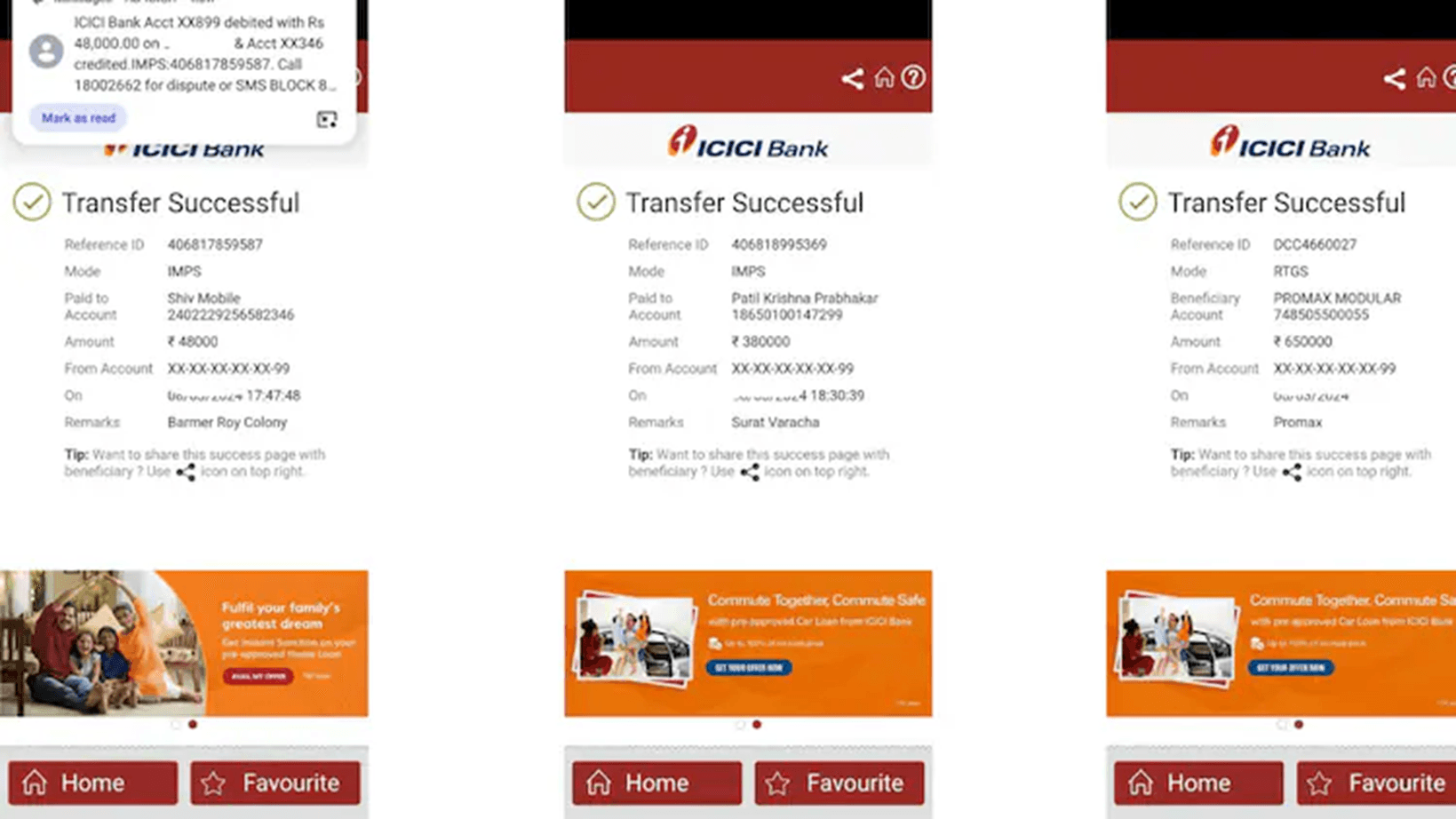
Ultimately, the scammers demanded an additional Rs 14 lakh, claiming this was necessary for a higher withdrawal limit. Realizing her predicament too late, Tripti had lost approximately Rs 12 lakh, representing most of her savings.
Key Lessons to Prevent Such Scams:
To protect against similar scams:
Be Wary of Social Media Offers: Investment schemes appearing through unsolicited social media or messaging platforms are typically fraudulent. Ignore or independently verify these offers.
Conduct Extensive Research: Thoroughly investigate platforms through independent resources, regulatory agencies, and legitimate financial advisors before investing any money.
Resist Group Pressure: Scammers commonly use "group validation" and peer pressure tactics. Always make financial decisions independently, free from external pressures.
Derek Lost £162,000 in Crypto Scam Promising Millions
Derek, a 69-year-old UK pensioner, fell victim to an elaborate scam conducted by fraudsters posing as representatives from "Golden Currencies." His troubles started after clicking on an appealing crypto investment article online. Shortly thereafter, Derek received phone calls from scammers displaying fabricated financial results, convincing him his crypto investments had astonishingly soared to approximately $10 million (£8 million).

Initially hesitant, Derek was repeatedly reassured and manipulated into believing the profits were genuine yet temporarily inaccessible. Every withdrawal attempt prompted new demands for payment, allegedly covering various "processing fees" and "taxes." Desperate to access these supposed millions, Derek borrowed heavily from his family and took out substantial bank loans totaling £20,000. Eventually, he realized the harsh reality: the promised fortune never existed, and he had lost £162,000.
Key Lessons to Prevent Such Scams:
To safeguard against scams involving unrealistic investment promises:
Identify Unrealistic Claims: Any promise of guaranteed or excessively high returns is a clear indicator of potential fraud. Always approach such claims with skepticism.
Consult Independent Advisors: Before committing significant funds, seek advice from licensed, unbiased financial advisors who can offer objective assessments of investment opportunities.
Recognize Emotional Manipulation: Scammers frequently exploit urgency and emotional vulnerability. Stay alert to these tactics, and take ample time before making decisions.
Conclusion
These real-life crypto scam stories vividly illustrate the complex strategies scammers use to exploit investors. Vigilance, thorough verification, and continuous education are essential for safeguarding your financial assets. CoinCrowd remains dedicated to keeping you informed and protected against crypto threats, empowering you to make informed decisions confidently.
Stay informed and secure—follow CoinCrowd for more valuable insights on protecting yourself from crypto scams and threats.
Cryptocurrency has transformed financial landscapes, creating significant opportunities but also substantial risks. With rising crypto adoption, sophisticated scams targeting investors have increased dramatically. Real stories of financial loss serve as powerful lessons, highlighting vulnerabilities and educating users to avoid similar traps. In this article, we delve into actual crypto scam cases, exploring detailed accounts and providing actionable advice tailored to each scenario.
Victim Loses $330K to Delayed Phishing Scam
In a distressing phishing attack detailed by ScamSniffer, a crypto investor lost nearly $330,000 in AAVE tokens. This particular scam, termed "approval phishing," involved deceptive authorization obtained long before funds were actually stolen. On February 10, 2024, the victim unknowingly signed a malicious approval transaction, inadvertently granting scammers permission to withdraw tokens.
Remarkably, the scammers waited patiently for 408 days, finally exploiting the permission on March 24, 2025, draining exactly 1,999.23 AAVE tokens (valued at $329,743). Before this theft, the victim's wallet contained approximately $527,498 worth of AAVE, leaving them with just $197,755 post-theft. Interestingly, although other valuable tokens were also available, the scammers targeted only the AAVE holdings.
Approval phishing schemes like this one can remain dormant for extended periods, silently threatening victims long after initial approval. Chainalysis reports suggest that approval phishing scams have resulted in losses approaching $1 billion since May 2021, emphasizing the necessity of vigilance.
Key Lessons to Prevent Such Scams:
To prevent falling victim to approval phishing:
Regularly Audit Permissions: Routinely use tools like Etherscan to review and revoke outdated or unnecessary wallet permissions, preventing dormant approvals from becoming active threats.
Implement Transaction Checks: Before granting permissions, double-check transaction details meticulously, ensuring legitimacy and necessity.
Monitor Wallet Activity: Set up real-time alerts for wallet activities, quickly identifying unauthorized or unexpected transactions.
Fake Crypto Investment Platform “SAXO Group” Scams California Investors out of $1.6M
Two California residents were deceived by scammers operating under the guise of a fraudulent crypto trading platform named "SAXO Group," deceptively similar to the legitimate Saxo Bank. In the first incident, a victim connected through Facebook Messenger, eventually transitioning to WhatsApp. The scammers gradually built trust by sharing stories of successful gold investments.
Convinced by these stories, the victim downloaded the "SAXO Group" app and deposited cryptocurrency. Initially, profits seemed substantial, but upon attempting withdrawal, the victim faced an unexpected demand for over $65,000 in fictitious "personal taxes." Unable to meet this requirement, the victim lost around $49,000.
In the second case, the victim was approached via phone by "Lee," who claimed to offer a similarly lucrative gold investment through SAXO Group. Over time, the victim transferred substantial funds, believing the profits were genuine. Eventually, when attempting withdrawal, the scammers demanded more than $500,000 in fabricated "advance taxes," supposedly owed to the Dutch government. After paying this enormous sum, the victim was abruptly abandoned by "Lee," resulting in a total loss exceeding $1.5 million.
Key Lessons to Prevent Such Scams:
To avoid similar investment platform scams:
Verify Platforms Carefully: Always confirm the legitimacy of investment platforms independently through official financial regulatory bodies or credible financial advisors.
Scrutinize Tax and Fee Demands: Genuine financial institutions do not typically request exorbitant upfront fees or taxes. Be skeptical of platforms making such demands, and seek independent verification.
Avoid Pressure from Unknown Sources: Investment recommendations from unfamiliar social media or messaging contacts should be viewed with extreme skepticism, regardless of apparent success stories.
Tripti Lost Rs 12 Lakh to a Fake Crypto Scam on Telegram
Tripti, residing in Delhi-NCR, experienced devastating financial loss due to a deceptive crypto investment scheme initiated through WhatsApp. Initially approached through a seemingly innocent review rewards program, Tripti received small payments for reviewing hotels online, gaining trust in the scheme.
Eventually, scammers moved communications to Telegram, introducing her to high-paying "merchant tasks." Persuaded by seemingly legitimate interactions, Tripti invested Rs 48,000 into a fraudulent crypto platform named 'cryptoglobe.' Subsequent withdrawal attempts led scammers to demand additional deposits. Under significant peer pressure from fake "investors" within the group, Tripti invested even more money, including Rs 3,80,000 and then Rs 6,50,000, believing this would enable her to withdraw larger profits.
Ultimately, the scammers demanded an additional Rs 14 lakh, claiming this was necessary for a higher withdrawal limit. Realizing her predicament too late, Tripti had lost approximately Rs 12 lakh, representing most of her savings.
Key Lessons to Prevent Such Scams:
To protect against similar scams:
Be Wary of Social Media Offers: Investment schemes appearing through unsolicited social media or messaging platforms are typically fraudulent. Ignore or independently verify these offers.
Conduct Extensive Research: Thoroughly investigate platforms through independent resources, regulatory agencies, and legitimate financial advisors before investing any money.
Resist Group Pressure: Scammers commonly use "group validation" and peer pressure tactics. Always make financial decisions independently, free from external pressures.
Derek Lost £162,000 in Crypto Scam Promising Millions
Derek, a 69-year-old UK pensioner, fell victim to an elaborate scam conducted by fraudsters posing as representatives from "Golden Currencies." His troubles started after clicking on an appealing crypto investment article online. Shortly thereafter, Derek received phone calls from scammers displaying fabricated financial results, convincing him his crypto investments had astonishingly soared to approximately $10 million (£8 million).
Initially hesitant, Derek was repeatedly reassured and manipulated into believing the profits were genuine yet temporarily inaccessible. Every withdrawal attempt prompted new demands for payment, allegedly covering various "processing fees" and "taxes." Desperate to access these supposed millions, Derek borrowed heavily from his family and took out substantial bank loans totaling £20,000. Eventually, he realized the harsh reality: the promised fortune never existed, and he had lost £162,000.
Key Lessons to Prevent Such Scams:
To safeguard against scams involving unrealistic investment promises:
Identify Unrealistic Claims: Any promise of guaranteed or excessively high returns is a clear indicator of potential fraud. Always approach such claims with skepticism.
Consult Independent Advisors: Before committing significant funds, seek advice from licensed, unbiased financial advisors who can offer objective assessments of investment opportunities.
Recognize Emotional Manipulation: Scammers frequently exploit urgency and emotional vulnerability. Stay alert to these tactics, and take ample time before making decisions.
Conclusion
These real-life crypto scam stories vividly illustrate the complex strategies scammers use to exploit investors. Vigilance, thorough verification, and continuous education are essential for safeguarding your financial assets. CoinCrowd remains dedicated to keeping you informed and protected against crypto threats, empowering you to make informed decisions confidently.
Stay informed and secure—follow CoinCrowd for more valuable insights on protecting yourself from crypto scams and threats.
Cryptocurrency has transformed financial landscapes, creating significant opportunities but also substantial risks. With rising crypto adoption, sophisticated scams targeting investors have increased dramatically. Real stories of financial loss serve as powerful lessons, highlighting vulnerabilities and educating users to avoid similar traps. In this article, we delve into actual crypto scam cases, exploring detailed accounts and providing actionable advice tailored to each scenario.
Victim Loses $330K to Delayed Phishing Scam
In a distressing phishing attack detailed by ScamSniffer, a crypto investor lost nearly $330,000 in AAVE tokens. This particular scam, termed "approval phishing," involved deceptive authorization obtained long before funds were actually stolen. On February 10, 2024, the victim unknowingly signed a malicious approval transaction, inadvertently granting scammers permission to withdraw tokens.
Remarkably, the scammers waited patiently for 408 days, finally exploiting the permission on March 24, 2025, draining exactly 1,999.23 AAVE tokens (valued at $329,743). Before this theft, the victim's wallet contained approximately $527,498 worth of AAVE, leaving them with just $197,755 post-theft. Interestingly, although other valuable tokens were also available, the scammers targeted only the AAVE holdings.
Approval phishing schemes like this one can remain dormant for extended periods, silently threatening victims long after initial approval. Chainalysis reports suggest that approval phishing scams have resulted in losses approaching $1 billion since May 2021, emphasizing the necessity of vigilance.
Key Lessons to Prevent Such Scams:
To prevent falling victim to approval phishing:
Regularly Audit Permissions: Routinely use tools like Etherscan to review and revoke outdated or unnecessary wallet permissions, preventing dormant approvals from becoming active threats.
Implement Transaction Checks: Before granting permissions, double-check transaction details meticulously, ensuring legitimacy and necessity.
Monitor Wallet Activity: Set up real-time alerts for wallet activities, quickly identifying unauthorized or unexpected transactions.
Fake Crypto Investment Platform “SAXO Group” Scams California Investors out of $1.6M
Two California residents were deceived by scammers operating under the guise of a fraudulent crypto trading platform named "SAXO Group," deceptively similar to the legitimate Saxo Bank. In the first incident, a victim connected through Facebook Messenger, eventually transitioning to WhatsApp. The scammers gradually built trust by sharing stories of successful gold investments.
Convinced by these stories, the victim downloaded the "SAXO Group" app and deposited cryptocurrency. Initially, profits seemed substantial, but upon attempting withdrawal, the victim faced an unexpected demand for over $65,000 in fictitious "personal taxes." Unable to meet this requirement, the victim lost around $49,000.
In the second case, the victim was approached via phone by "Lee," who claimed to offer a similarly lucrative gold investment through SAXO Group. Over time, the victim transferred substantial funds, believing the profits were genuine. Eventually, when attempting withdrawal, the scammers demanded more than $500,000 in fabricated "advance taxes," supposedly owed to the Dutch government. After paying this enormous sum, the victim was abruptly abandoned by "Lee," resulting in a total loss exceeding $1.5 million.
Key Lessons to Prevent Such Scams:
To avoid similar investment platform scams:
Verify Platforms Carefully: Always confirm the legitimacy of investment platforms independently through official financial regulatory bodies or credible financial advisors.
Scrutinize Tax and Fee Demands: Genuine financial institutions do not typically request exorbitant upfront fees or taxes. Be skeptical of platforms making such demands, and seek independent verification.
Avoid Pressure from Unknown Sources: Investment recommendations from unfamiliar social media or messaging contacts should be viewed with extreme skepticism, regardless of apparent success stories.
Tripti Lost Rs 12 Lakh to a Fake Crypto Scam on Telegram
Tripti, residing in Delhi-NCR, experienced devastating financial loss due to a deceptive crypto investment scheme initiated through WhatsApp. Initially approached through a seemingly innocent review rewards program, Tripti received small payments for reviewing hotels online, gaining trust in the scheme.
Eventually, scammers moved communications to Telegram, introducing her to high-paying "merchant tasks." Persuaded by seemingly legitimate interactions, Tripti invested Rs 48,000 into a fraudulent crypto platform named 'cryptoglobe.' Subsequent withdrawal attempts led scammers to demand additional deposits. Under significant peer pressure from fake "investors" within the group, Tripti invested even more money, including Rs 3,80,000 and then Rs 6,50,000, believing this would enable her to withdraw larger profits.
Ultimately, the scammers demanded an additional Rs 14 lakh, claiming this was necessary for a higher withdrawal limit. Realizing her predicament too late, Tripti had lost approximately Rs 12 lakh, representing most of her savings.
Key Lessons to Prevent Such Scams:
To protect against similar scams:
Be Wary of Social Media Offers: Investment schemes appearing through unsolicited social media or messaging platforms are typically fraudulent. Ignore or independently verify these offers.
Conduct Extensive Research: Thoroughly investigate platforms through independent resources, regulatory agencies, and legitimate financial advisors before investing any money.
Resist Group Pressure: Scammers commonly use "group validation" and peer pressure tactics. Always make financial decisions independently, free from external pressures.
Derek Lost £162,000 in Crypto Scam Promising Millions
Derek, a 69-year-old UK pensioner, fell victim to an elaborate scam conducted by fraudsters posing as representatives from "Golden Currencies." His troubles started after clicking on an appealing crypto investment article online. Shortly thereafter, Derek received phone calls from scammers displaying fabricated financial results, convincing him his crypto investments had astonishingly soared to approximately $10 million (£8 million).
Initially hesitant, Derek was repeatedly reassured and manipulated into believing the profits were genuine yet temporarily inaccessible. Every withdrawal attempt prompted new demands for payment, allegedly covering various "processing fees" and "taxes." Desperate to access these supposed millions, Derek borrowed heavily from his family and took out substantial bank loans totaling £20,000. Eventually, he realized the harsh reality: the promised fortune never existed, and he had lost £162,000.
Key Lessons to Prevent Such Scams:
To safeguard against scams involving unrealistic investment promises:
Identify Unrealistic Claims: Any promise of guaranteed or excessively high returns is a clear indicator of potential fraud. Always approach such claims with skepticism.
Consult Independent Advisors: Before committing significant funds, seek advice from licensed, unbiased financial advisors who can offer objective assessments of investment opportunities.
Recognize Emotional Manipulation: Scammers frequently exploit urgency and emotional vulnerability. Stay alert to these tactics, and take ample time before making decisions.
Conclusion
These real-life crypto scam stories vividly illustrate the complex strategies scammers use to exploit investors. Vigilance, thorough verification, and continuous education are essential for safeguarding your financial assets. CoinCrowd remains dedicated to keeping you informed and protected against crypto threats, empowering you to make informed decisions confidently.
Stay informed and secure—follow CoinCrowd for more valuable insights on protecting yourself from crypto scams and threats.

Your ultimate crypto wallet
Join our growing community for exclusive perks!
Your ultimate crypto wallet
Join our growing community for exclusive perks!
Your ultimate crypto wallet
Join our growing community for exclusive perks!
Your ultimate crypto wallet
Join our growing community for exclusive perks!
Your ultimate crypto wallet
Join our growing community for exclusive perks!
Your ultimate crypto wallet
Join our growing community for exclusive perks!